
Can Brainspotting Help with Childhood Trauma?

If you’re an overwhelmed mom in North Carolina or South Carolina carrying the weight of past trauma while juggling daily responsibilities, you’re not alone. The effects of childhood trauma don’t just disappear with time. They show up in your parenting, your relationships, and your ability to regulate stress. Fortunately, innovative therapies like Brainspotting for trauma are offering new hope for healing. As a Brainspotting therapist serving clients in Charlotte, Asheville, Rock Hill, and across NC and SC, I’ve seen firsthand how this modality can shift deep-rooted pain and bring clarity and relief.
What Is Brainspotting?
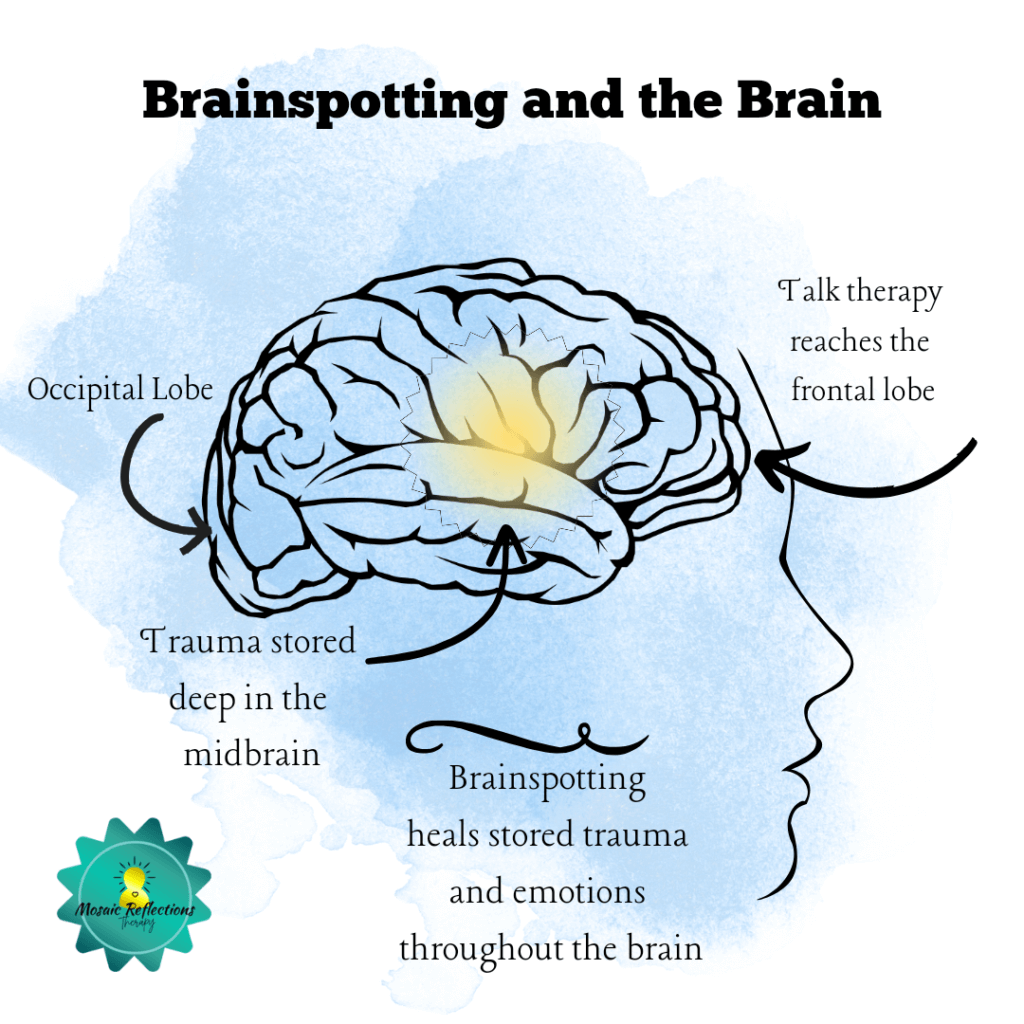
Brainspotting is a brain-body therapy developed by Dr. David Grand that uses specific eye positions to access unprocessed trauma stored in the subcortical brain. Unlike traditional talk therapy, Brainspotting bypasses the logical brain and taps directly into where trauma is held in your survival brain.
For many of my clients, especially moms dealing with mom stress, emotional overload, or anxiety, this approach has helped unlock emotional blocks that kept them stuck for years. If you’ve ever said, “I don’t know why I’m so reactive,” or “I know this shouldn’t bother me, but it does,” Brainspotting might be exactly what your nervous system needs.
How Childhood Trauma Shows Up in Adulthood
Childhood trauma can take many forms. It may involve abuse or witnessing violence, but it can also include experiences that are easier to overlook, such as emotional neglect, instability, frequent criticism, unpredictable caregiving, or growing up feeling like you had to be perfect to feel accepted.
Experiences from childhood can continue to influence how you respond to stress, relationships, and parenting as an adult. You might notice patterns such as:
- Difficulty trusting others
- People-pleasing or struggling to set boundaries
- Feeling overwhelmed by seemingly small stressors
- Shutting down or feeling emotionally numb
- Strong emotional reactions that are difficult to understand
- Parenting reactions that remind you of patterns you hoped not to repeat
For some moms, becoming a parent brings old experiences into sharper focus. You may notice yourself yelling more than you want to, withdrawing during conflict, feeling intensely criticized, or questioning whether you’re doing enough. Exploring these patterns in therapy can help you understand how past experiences may be influencing what feels difficult today.

How Brainspotting May Support Adults With Childhood Trauma
Childhood experiences can continue to affect how you respond to stress, relationships, conflict, and situations that leave you feeling overwhelmed. You may understand where some of your patterns come from and still find that certain emotional or physical reactions are difficult to shift.
Brainspotting is an approach that uses a client’s visual field, focused attention, and awareness of internal experiences during therapy. For some people, it can provide another way to explore difficult experiences when talking about them directly feels challenging.
During Brainspotting therapy, you may have opportunities to:
- Notice emotions, thoughts, and physical sensations as they arise
- Process difficult experiences at a pace that feels manageable
- Explore patterns connected to past experiences
- Build greater awareness of how you respond to stress and emotional triggers
I offer Brainspotting through online therapy for adults throughout North Carolina, including Charlotte, Asheville, and other communities across the state.
Who Is Brainspotting For?
Brainspotting can be beneficial for anyone experiencing trauma, anxiety, depression, or emotional overwhelm. I specialize in working with:
- Overwhelmed moms
- Childhood trauma
- Sexual Abuse
- Women with ADHD or high sensitivity
- Women recovering from narcissistic relationships
- Adult children of emotionally immature parents
- Individuals with trauma from adoption or attachment wounds

Benefits of Brainspotting Therapy for Moms
Support With Anxiety and Emotional Reactivity
One moment you’re fine, the next you’re snapping at your partner or tearing up in the laundry room. When reactions feel bigger than the moment itself, it can be helpful to slow down and notice what’s happening emotionally and physically. Brainspotting offers a focused way to explore those reactions and the experiences that may be connected to them. Over time, therapy can help you better understand your patterns and practice responding to stressful moments with greater awareness and choice.
Building Patience and Self-Compassion
The pressure to be a “perfect mom” is exhausting. Past experiences can shape the expectations you carry about motherhood, including feelings of shame, guilt, or never being enough. Brainspotting can offer space to notice and explore these experiences without requiring you to have all the right words. As you become more aware of the patterns behind your self-criticism, therapy can support you in practicing greater patience and compassion toward yourself, including on the days when parenting feels especially hard.
Understanding Sleep Difficulties and Intrusive Thoughts
Sleep can feel impossible when your mind is racing at 2 a.m. with to-do lists, regrets, or worst-case scenarios. Stress, anxiety, and difficult past experiences can all show up when things finally get quiet. Brainspotting offers a way to slow down and pay attention to the thoughts, emotions, and physical sensations connected to what you’re experiencing. In therapy, you can explore the patterns that may be contributing to feeling constantly on alert and develop a better understanding of what comes up when your mind has a hard time settling.
Exploring Patterns in Your Relationships
It can be hard to feel connected to your partner or kids when you’re overwhelmed, distracted, or emotionally on edge. Past experiences can also influence how you respond to conflict, closeness, and the everyday demands of relationships. Brainspotting can give you space to explore these patterns and notice what comes up emotionally and physically. Therapy can support you in becoming more aware of how past experiences may be showing up in your relationships today, whether that’s during a difficult conversation with your partner or simply trying to be present for a bedtime story with your child.
Coping With Stress Around Parenting
Parenting is stressful. Period. The tantrums, picky eating, screen-time battles, and constant laundry pile can be overwhelming. Sometimes everyday parenting moments also bring up emotional reactions that feel surprisingly intense. Brainspotting can provide space to explore those reactions and what may be connected to them. Therapy can help you notice your triggers, understand your patterns, and explore ways of responding when parenting pushes every button you have. The goal isn’t picture-perfect parenting. It’s having more awareness of what’s happening for you when things get hard.
Online Therapy in North Carolina and South Carolina
You don’t need to drive across town or wait months for an appointment. I offer online Brainspotting therapy in North Carolina and South Carolina, including clients in Charlotte, Asheville, Rock Hill, and other surrounding cities.
Online therapy allows busy moms to access deep healing from the comfort of their home.

What to Expect in a Brainspotting Session
Your first brainspotting session begins with time to talk about what brings you to therapy, what you’d like support with, and any relevant history you feel comfortable sharing. I’ll also explain the Brainspotting process and answer questions before we begin.
During Brainspotting, we identify a “brainspot,” or a particular point in your visual field, while paying attention to the thoughts, emotions, and physical sensations that arise. You don’t have to retell every detail of a difficult experience. You might talk, sit quietly, notice emotions, or simply pay attention to what comes up as we work together.

FAQ: Brainspotting for Childhood Trauma in NC and SC
1. Can Brainspotting really help with trauma from decades ago?
Yes. Trauma doesn’t have an expiration date. Whether your experiences happened five or fifty years ago, your body can still hold on to them. Brainspotting targets the subcortical brain, where early trauma is often stored. This allows processing at a deep, non-verbal level.
2. What’s the difference between Brainspotting and EMDR?
While both are brain-based therapies, EMDR uses bilateral stimulation (often through eye movements), while Brainspotting finds a fixed eye position (the “Brainspot”) that corresponds to where the trauma is stored. Many people find Brainspotting less activating and more natural or intuitive.
3. How many sessions will I need?
This varies by person and the complexity of trauma. Some clients experience relief in just a few sessions, while others benefit from ongoing support. I tailor therapy to your pace and readiness.
4. Is Brainspotting safe for moms with busy lives and limited time?
Absolutely. Brainspotting doesn’t require you to relive your trauma or prepare lengthy explanations. Many busy moms find it to be a gentle, efficient way to process stuck emotional pain.
5. Can Brainspotting help with physical symptoms like tension, fatigue, or gut issues?
Yes. Trauma affects the nervous system, and symptoms like fatigue, digestive issues, or muscle tension can all be linked to unresolved emotional pain. Brainspotting often leads to somatic relief as the nervous system relaxes.
6. I live in Asheville, Fayetteville, or somewhere else in North Carolina or South Carolina and need online therapy. Can we work together?
Yes! I offer online Brainspotting therapy in North Carolina and South Carolina, serving clients in Asheville, Charlotte, Rock Hill, Greenville, and other cities. All sessions are HIPAA-compliant and can be done from your phone, tablet, or computer.
7. Do you only work with moms?
While many of my clients are overwhelmed moms, I also work with adult children of narcissists, people with ADHD, adoptees, and anyone struggling with the weight of past trauma.
8. What if I don’t know where to start or what my trauma even is?
That’s okay. Brainspotting doesn’t require you to have everything figured out. Sometimes, we start with a body sensation or a vague feeling. Your brain will guide the way.
Ready to Start Your Healing Journey?
Whether you’re in Charlotte, Asheville, or somewhere in between, therapy for overwhelmed moms doesn’t have to feel like another item on your to-do list. Brainspotting can help you finally feel safe in your body, in your relationships, and in your role as a mother.
If you’re ready to explore childhood trauma therapy in NC or SC, let’s talk. Schedule a free 15-minute consultation and see if this path feels right for you.


Eleena Hardzinski is a Licensed Marriage and Family Therapist and a Certified Brainspotting Therapist who practices online in North Carolina, South Carolina, and Wisconsin.
Eleena supports women struggling with motherhood, relationships, past traumas, ADHD, anxiety, and more. She helps overwhelmed moms find balance, overcome guilt, establish healthy boundaries, heal from past traumas, improve family communication, and regain confidence and joy in their lives.